Wastewater Treatment for Properties Without Sewer Access
Aerobic System Installation in Tyler for rural properties and new builds that require on-site septic treatment systems
Deeply Rooted Plumbing LLC installs aerobic septic systems for residential properties in Tyler, Texas, that lack access to municipal sewer lines. When your lot is outside city limits or in a developing area without sewer infrastructure, an aerobic treatment system processes household wastewater on-site using oxygen to break down solids and treat effluent before it's discharged. This service includes site evaluation, system sizing, permitting coordination, tank installation, and setup of aerators, pumps, and spray heads.
Aerobic systems differ from traditional septic tanks by introducing air into the treatment process, which accelerates bacterial breakdown and produces cleaner effluent suitable for surface irrigation or drip dispersal. Rural properties in expanding areas around Tyler often require these systems to meet county health department standards, and proper installation ensures the system operates efficiently without odor, backups, or premature component failure. Sizing is based on the number of bedrooms, daily water usage, and soil conditions determined during a percolation test.
If you're building on a property without sewer access or need a compliant wastewater solution for your Tyler-area home, contact us to discuss site requirements and system options.
How an Aerobic System Gets Installed
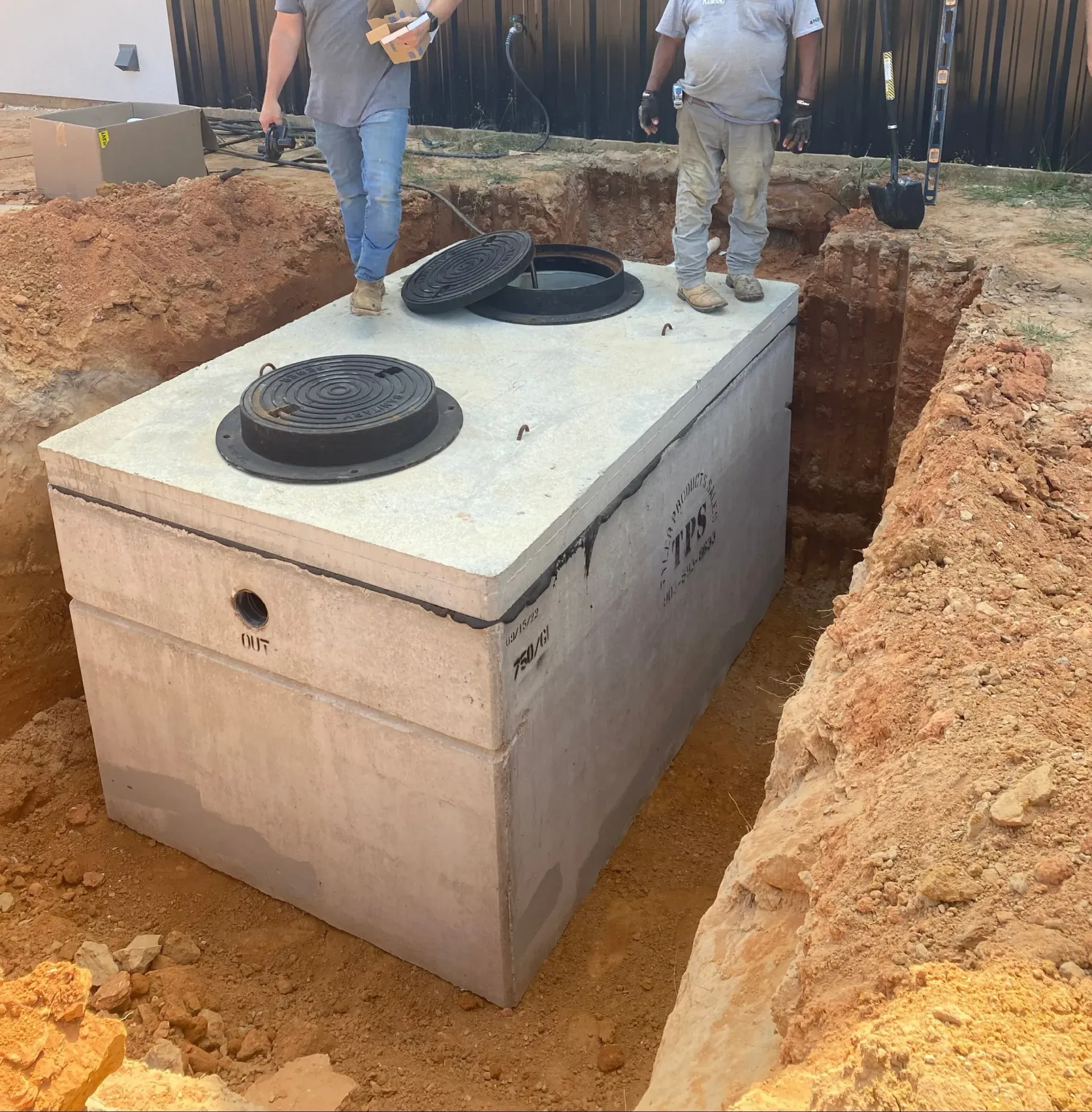
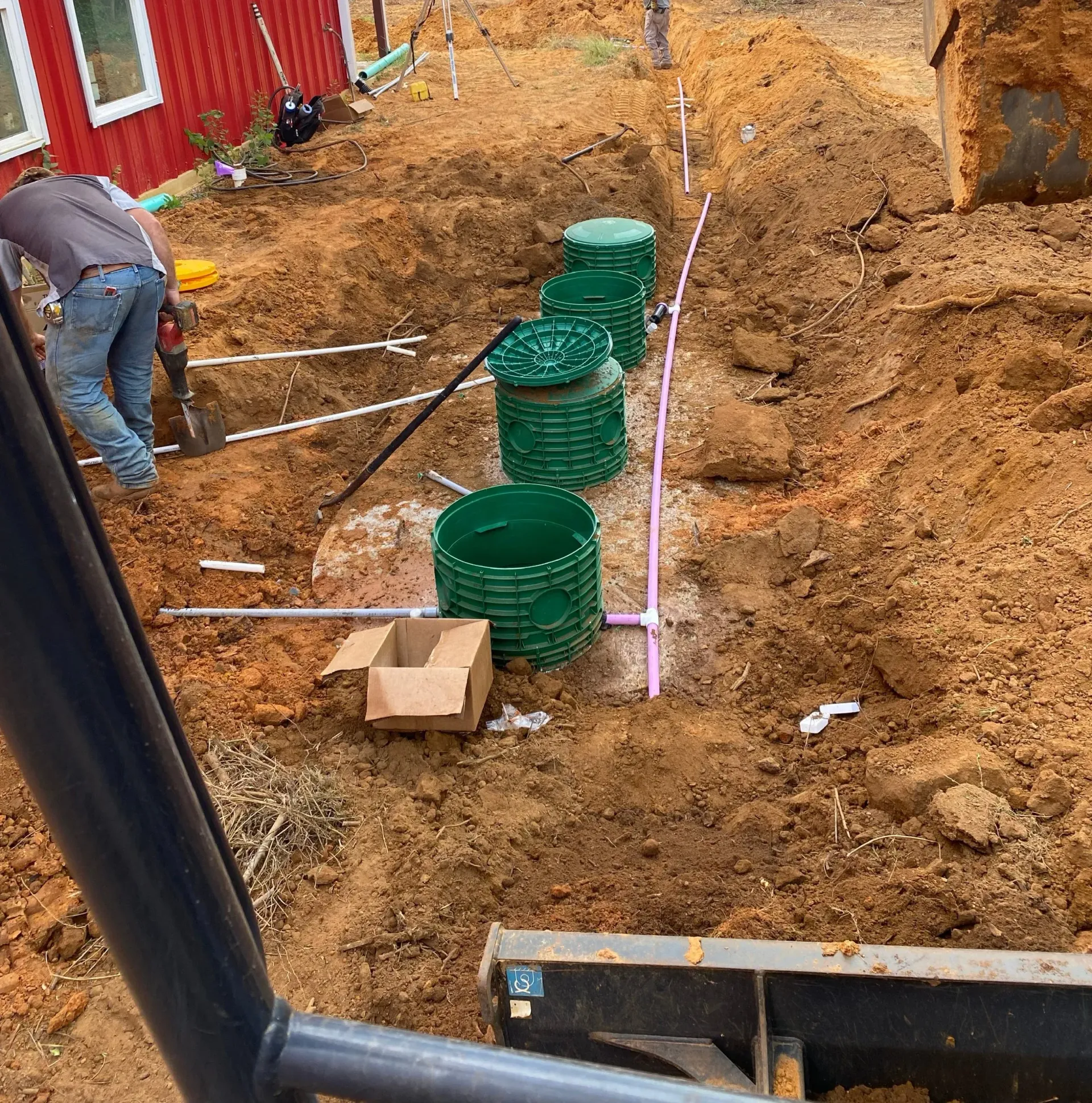
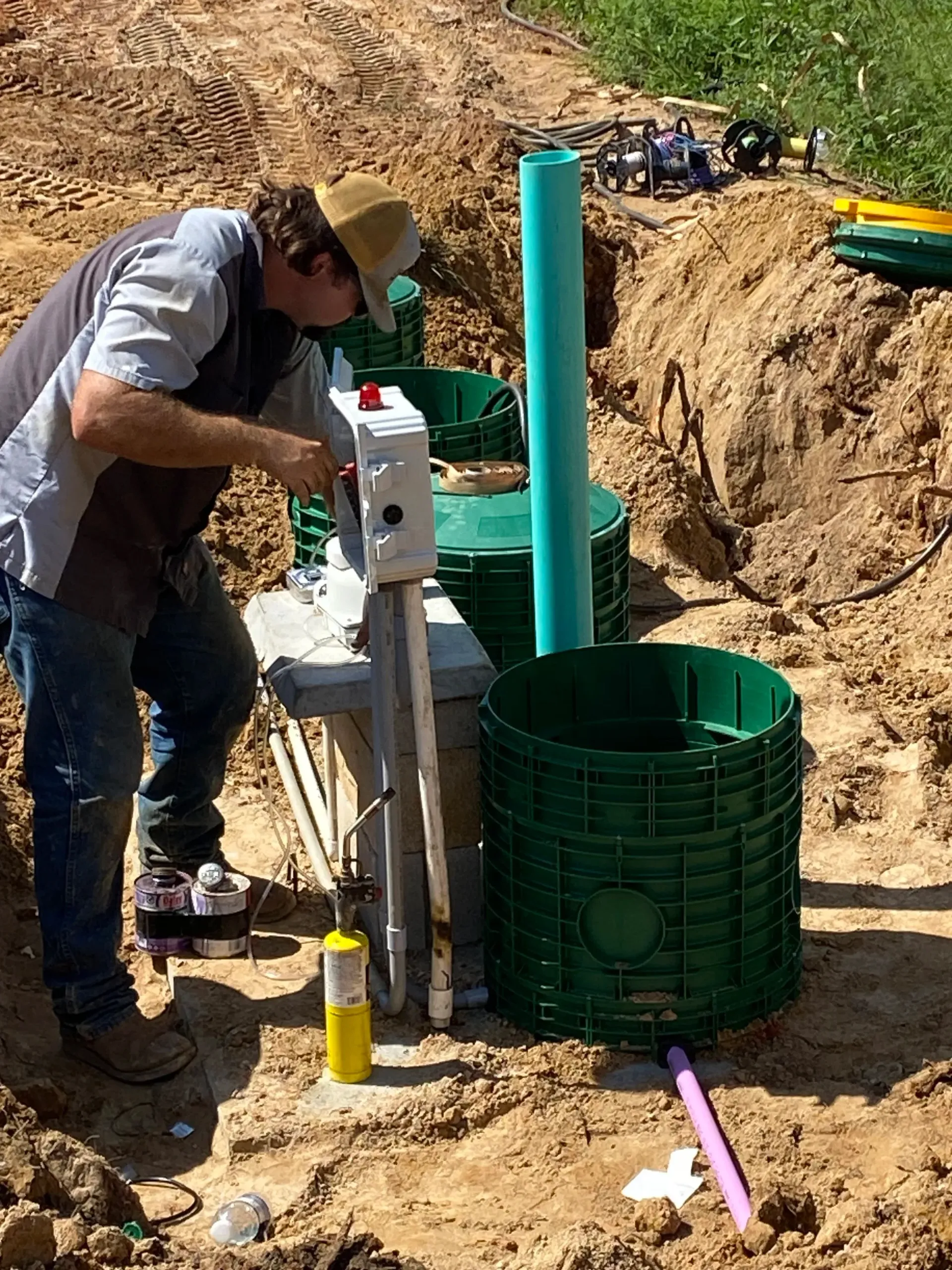
You'll see excavation begin after permits are approved and the site layout is marked, with tanks positioned to maintain required setbacks from wells, property lines, and structures. The precast concrete or fiberglass tanks are set level in the excavation, then connected to your home's sewer line and to the spray field or drip lines where treated effluent is dispersed. An aerator unit is installed inside the treatment chamber to inject oxygen, and a pump moves treated water to the distribution system on a timed cycle.
Once installation is complete and the system is backfilled, Deeply Rooted Plumbing LLC runs the system through a full cycle to confirm aeration, pumping, and distribution function correctly. You'll notice that wastewater leaves your home normally, with no backup or slow drainage, and the spray heads or drip lines distribute effluent evenly across the designated area without pooling or runoff. The control panel inside your home or garage displays system status and alerts you to any operational issues.
The process includes coordinating soil testing and permit applications with local authorities, arranging delivery and placement of tanks, and installing electrical connections for pumps and aerators.
Routine maintenance contracts and inspection schedules are separate from installation but can be arranged at the time of setup. System capacity is designed to handle your household's wastewater volume, but garbage disposals and water softener backwash can affect performance and may require system modifications.
Common Questions About Aerobic Septic Systems
Property owners in Tyler often have concerns about costs, maintenance, and how these systems function day to day. Here's what you need to know.
What is the difference between an aerobic system and a conventional septic tank?
Aerobic systems use oxygen and mechanical components to treat wastewater more thoroughly than anaerobic septic tanks, producing cleaner effluent that can be spray-irrigated on the surface rather than absorbed in a buried drain field.
How often does an aerobic system need maintenance?
You'll need the system inspected and serviced every four to six months, including checking aerator function, cleaning filters, and testing effluent quality to maintain compliance with county regulations in Tyler.
Why do aerobic systems require electricity to operate?
The aerator and effluent pump both run on electricity to keep oxygen flowing through the treatment process and to distribute treated water on schedule, so a power outage can temporarily halt system operation.
How long does installation take from permit to completion?
Permitting and soil testing typically add two to four weeks before installation begins, and the physical installation takes three to five days depending on site conditions and system complexity.
Can an aerobic system handle a large household or high water usage?
Systems are sized based on the number of bedrooms and estimated daily flow, so a larger household requires a bigger tank and more robust aeration and pumping capacity to treat the additional wastewater volume.
Deeply Rooted Plumbing LLC installs aerobic treatment systems for homes throughout the Tyler area where municipal sewer service isn't available. For site evaluations and installation scheduling, call (903) 871-7668.